
Writer-in-Residence
Writing Space’s Writer-in-Residence program offers artists and designers dedicated time to develop and receive feedback on a writing project.
The project may take any form, including creative, critical, or history.
Residencies typically last four months.
The current term runs September-December 2026.
Applications for the Winter (January-April) 2027 term are now open and can be accessed here.
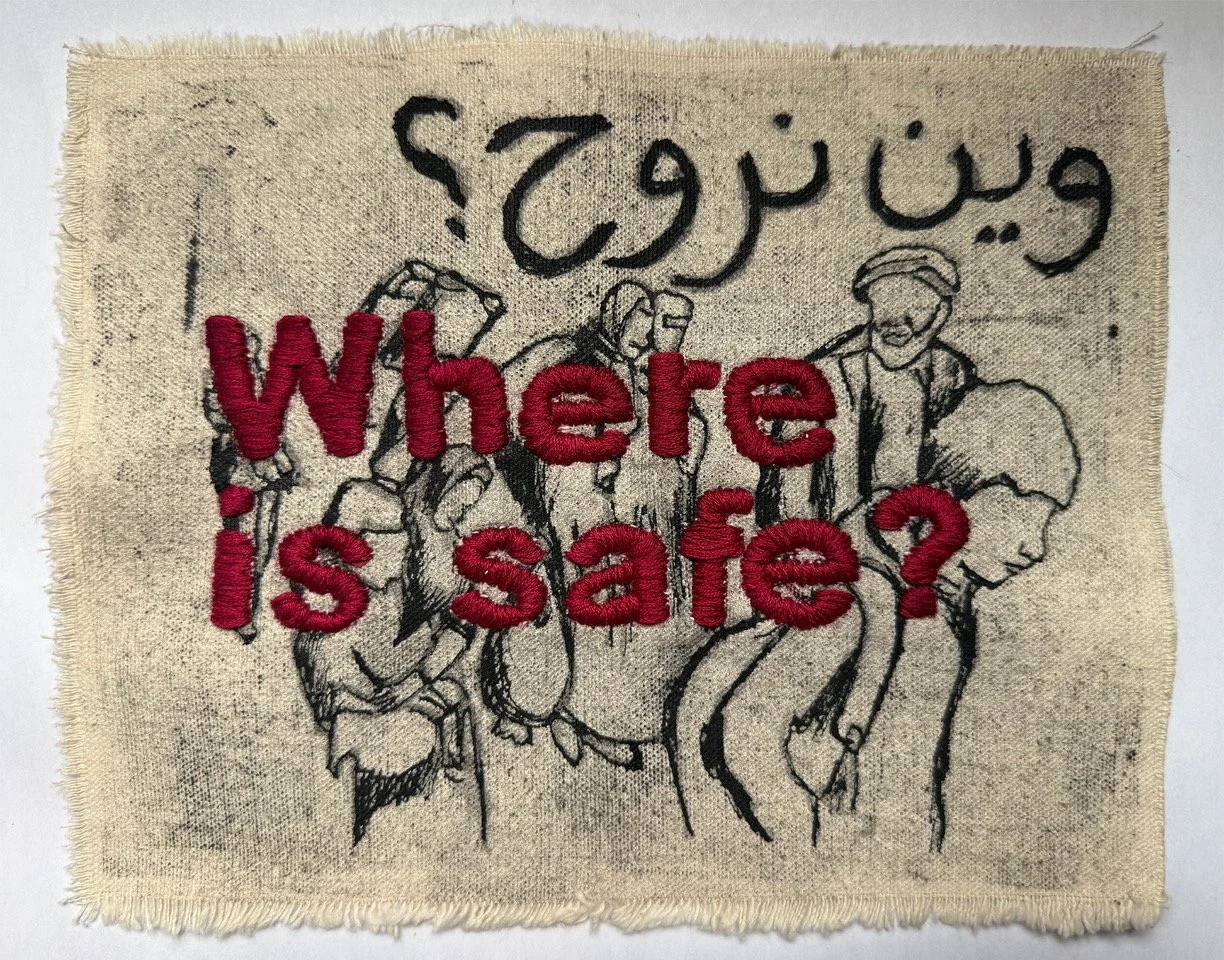
Linda Abdullah
Linda’s art practice is deeply intimate, informed by her parents’ experiences as survivors of the Nakba and by the ongoing erasure of Palestine. Raised as a stateless person in the diaspora, Linda became the first member of her family to obtain citizenship, an experience that continues to shape her exploration of belonging, memory, displacement, and identity.
During the residency Linda will work on an essay that looks into possibilities of going home to Palestine. How do you trace the way back to a place you’ve never been to? Her essay is responsive to her art practice, which recently shifted into creating art workshops as a source of knowledge, healing, and empowerment. Her goal is to look into representations and interpretations and to continue to weave the threads between homeland and exile, and the enduring longing for liberation and the right to return.
________________________________________
No One is Safe, embroidery and ink on canvas, 2026
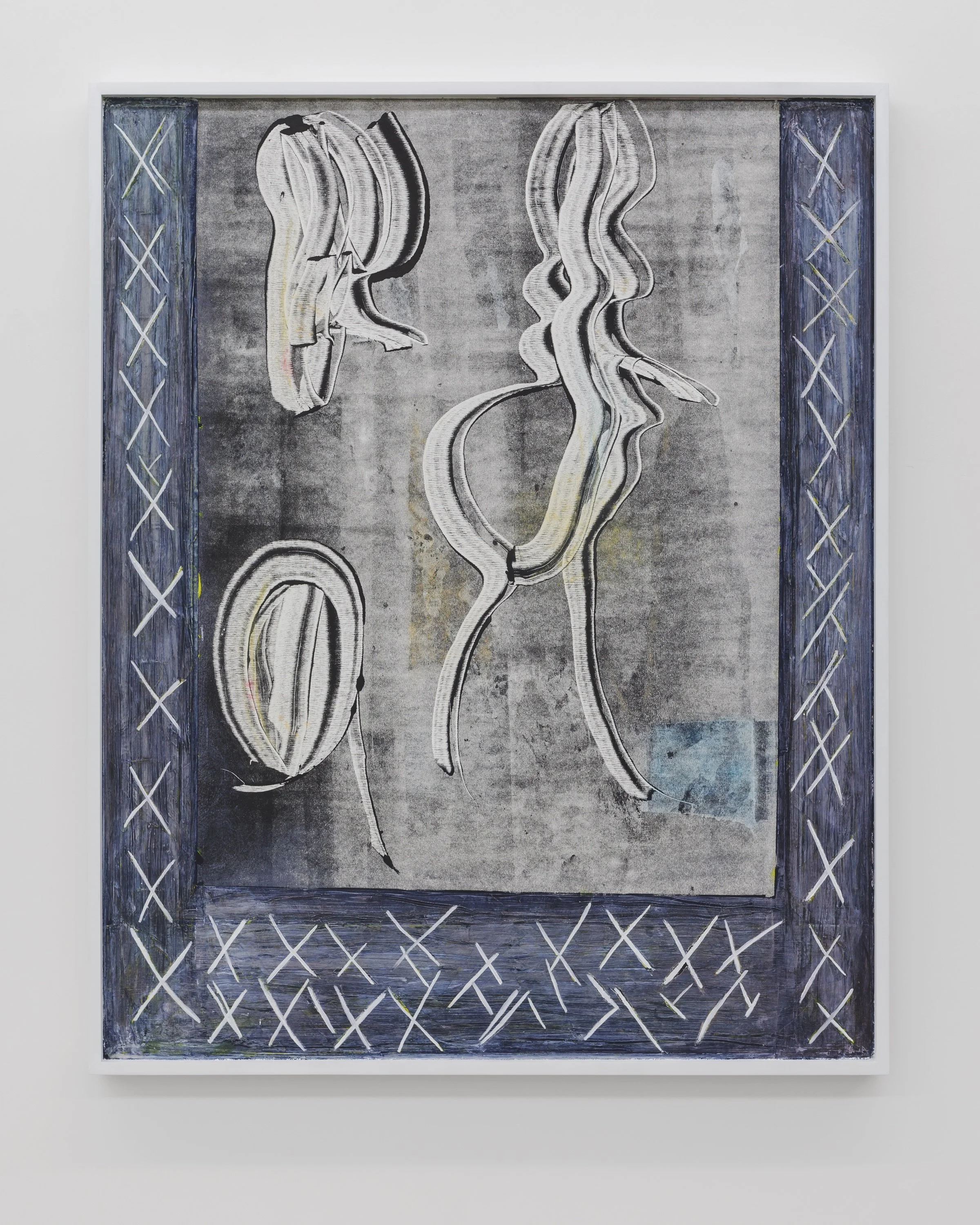
Mary Simpson
is a Brooklyn-based writer and artist whose twenty-year practice is informed by social connectivity through folk history, storytelling and artistic movements. For the past five years she has focused on publishing nonfiction essays on artists whose work or lives intersect with her own.
She’s writing a full-length manuscript that begins with a single moment twenty years ago, when she stood in front of an unfinished painting by Gustave Courbet (Preparation of a Bride/Dead Girl c. 1855) and had a violent premonition about her life and her place in the art world as a young artist. This memoir thread is braided with research examining the story of Courbet’s artistic trajectory as a young socialist and Bohemian in mid-nineteenth century Paris.
________________________________________
Elena, Oil and colored pencil on panel, 2021